Strong literacy skills help learners access the curriculum, communicate their ideas and become more confident in education and everyday life. However, gaps in reading, spelling and writing can make it difficult for a learner to demonstrate their knowledge or keep pace with their peers.
So, what is Units of Sound, and how can it help?
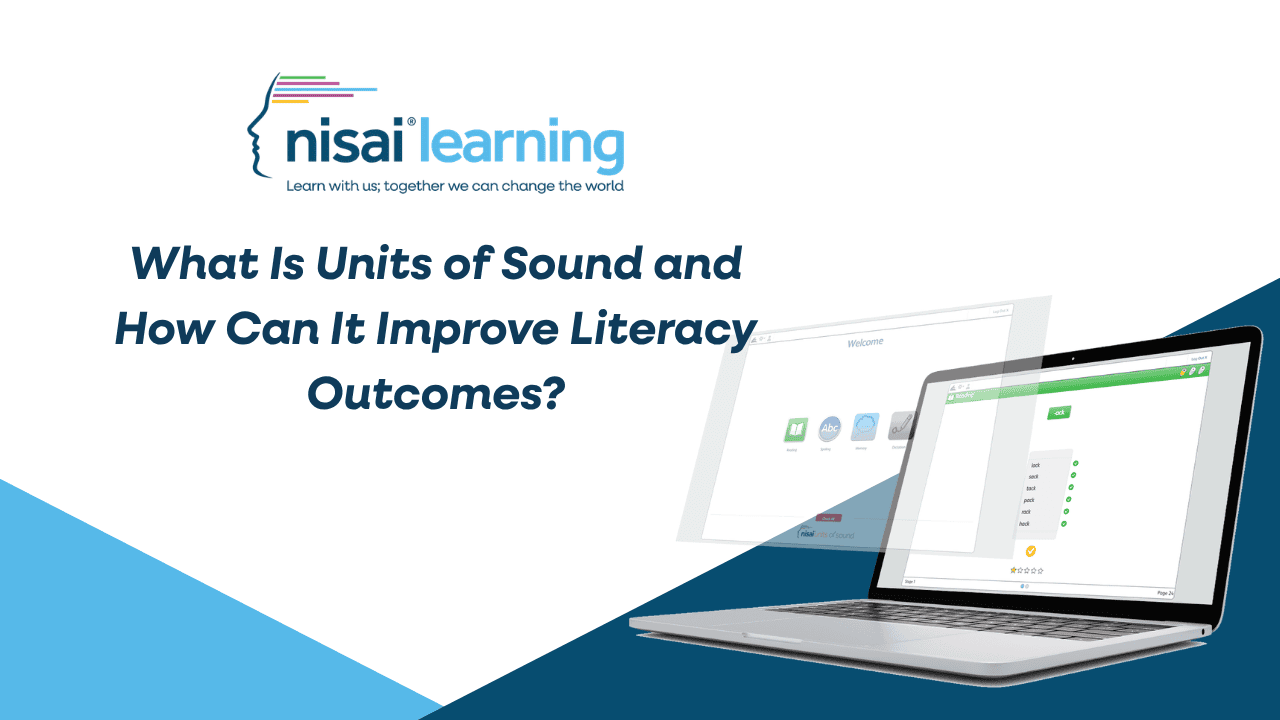
Units of Sound is an online, multi-sensory literacy intervention programme for learners aged eight and above. It provides structured activities across reading, spelling, memory and dictation, helping learners develop their skills gradually and at a pace suited to their needs.
How does Units of Sound support literacy development?
Units of Sound uses a structured, step-by-step approach to address gaps in foundational literacy skills. Learners revisit sounds, words and spelling patterns several times, completing a different activity on each occasion.
This repetition helps learners practise key skills until reading and spelling become more automatic. Individual reading and spelling placements ensure that each learner begins at an appropriate level rather than working through content that is too easy or too difficult.
Developing reading skills
The reading programme develops from individual sounds and words through to phrases, sentences and paragraphs. Learners can record themselves reading and compare their recording with the programme’s model.
Listening back encourages learners to identify differences, improve their pronunciation and correct mistakes independently. This can support reading accuracy, fluency and confidence while helping learners become more aware of how written words sound.
Improving spelling
Units of Sound gives learners repeated opportunities to connect sounds with written letters and spelling patterns. Activities develop from individual words to phrases, sentences and eventually paragraphs.
This structured progression helps learners consolidate spelling patterns before moving on to more complex language. As spelling becomes more automatic, students can devote more attention to expressing ideas and improving the overall quality of their writing.
Strengthening memory and dictation
Memory and dictation activities help learners retain sounds, words and sentence structures. These skills are important because successful literacy relies on more than recognising a word once.
Learners must be able to remember, retrieve and apply their knowledge in different contexts.
Regular practice can strengthen the connections between listening, reading, spelling and writing, supporting literacy across the wider curriculum.
Building reading fluency
Fluent reading allows learners to focus on understanding a text rather than using all their effort to decode individual words.
Units of Sound includes reading checks and fluency materials that allow tutors to measure progress and gather evidence of improvement. Learner work and scores are recorded automatically, making it easier to identify achievements and areas requiring further support.
Increasing confidence and independence
Literacy difficulties can affect a learner’s confidence and willingness to participate. If reading and spelling regularly lead to frustration, students may avoid tasks or assume that they cannot improve.
Units of Sound provides activities at an achievable, personalised level. Learners can follow clear instructions, work through tasks independently and see their progress over time.
Recording and reviewing their own reading also encourages self-correction. This helps learners take greater ownership of their development rather than relying on an adult to identify every mistake.
Who can benefit from Units of Sound?
Units of Sound is suitable for learners aged eight and above who need additional support with reading, spelling or writing. This can include:
-
- learners with dyslexia or other learning differences
- students with gaps in foundational literacy
- learners who have fallen behind their expected reading level
- young people who find spelling or written work difficult
- students learning English as an additional language
- adults who want to improve their literacy skills
The programme’s design and vocabulary make it suitable for children, teenagers and adults. It can be used in schools, colleges, workplaces or at home, making it a flexible option for different learning environments.
Helping learners achieve more with Nisai Learning
Nisai Learning combines personalised education with practical literacy support to help learners overcome barriers and make meaningful progress.
Units of Sound complements teaching by giving learners structured opportunities to practise reading, spelling, memory and dictation at their own level. Tutors can monitor recorded scores, review reading fluency and use progress information to guide future support.
For schools, local authorities and families, it provides a flexible way to strengthen foundational literacy skills while encouraging confidence and independent learning.
Help your learners build stronger reading, spelling and writing skills. Explore Units of Sound and request a demo.