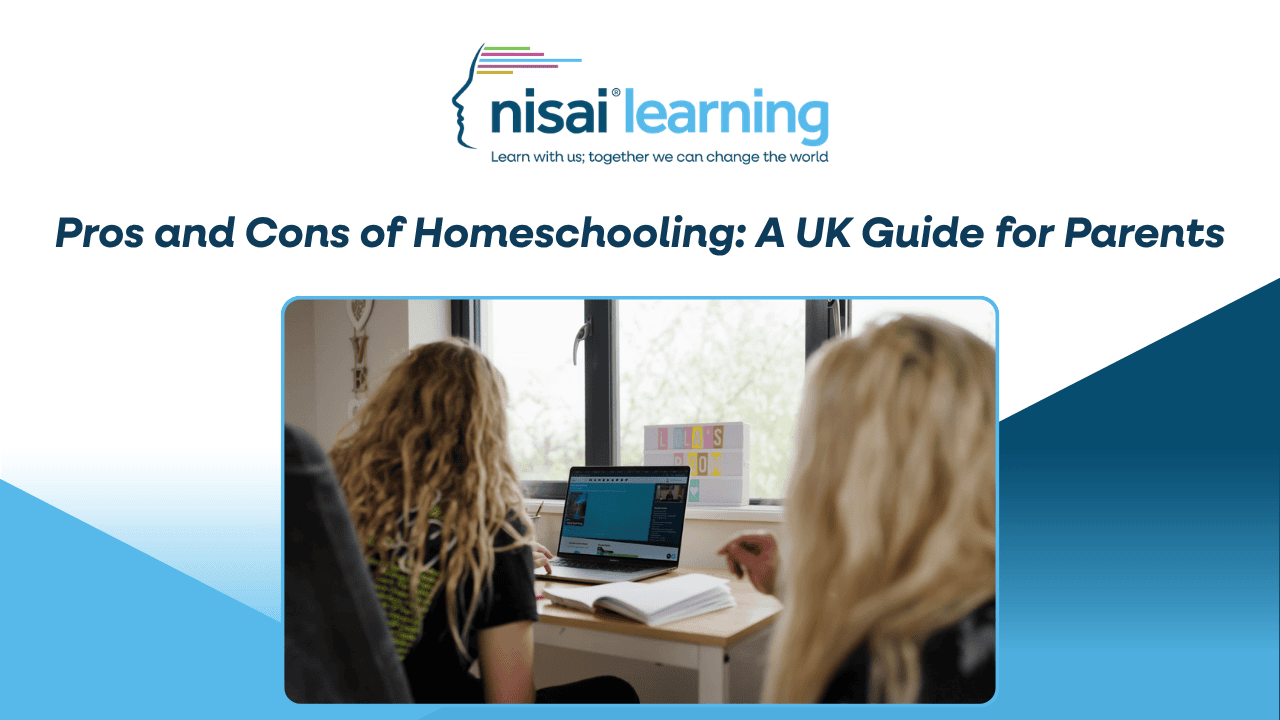
The main advantages of homeschooling are greater flexibility, more control over how a child learns and the ability to adapt education around their individual needs. The potential disadvantages include the time and responsibility placed on parents, arranging social opportunities, covering costs and organising qualifications such as GCSEs.
Whether homeschooling is right for your child depends on their needs, views and your family’s circumstances. For some children it can provide a more suitable way to learn. For others, a structured school or online school may provide support that is difficult to recreate independently.
This guide focuses primarily on home education in England. Requirements differ across the UK, so families should check the guidance that applies where they live.
What Are the Advantages of Homeschooling?
Greater Flexibility
One of the biggest benefits of homeschooling is flexibility. Families have more control over when, where and how learning takes place.
Education can be planned around a child’s concentration, health, interests and other commitments rather than following a standard school timetable. This can be particularly useful for young people involved in sport, performing arts or other activities that require considerable time.
Learning Can Be More Personalised
Homeschooling allows parents to adapt the pace of education around their child’s ability.
A learner can spend longer on subjects they find difficult and move more quickly through areas they understand well. Their interests can also play a greater role in what and how they learn.
Home educators in England are not required to follow the National Curriculum, although parents remain responsible for ensuring their child receives an efficient, suitable full-time education appropriate to their age, ability, aptitude and any special educational needs. GOV.UK
A Different Learning Environment
For some children, learning away from a busy school environment may reduce pressures associated with noise, large classes, social difficulties or a rigid timetable.
This can be particularly relevant when families are considering homeschooling because of anxiety, SEND or previous difficulties at school.
However, changing the learning environment will not automatically resolve every difficulty. Children who require specialist or emotional support may still need help alongside their academic education.
Families can learn more about Nisai’s SEND and EHCP support and student wellbeing.
More Time for Interests and Family Life
A flexible timetable can create more time for hobbies, practical skills, travel and family activities.
It may also allow learning to connect more closely with real-life experiences rather than being restricted to conventional lesson times.
What Are the Disadvantages of Homeschooling?
Parents Take on Significant Responsibility
Home education gives families greater control, but with that comes responsibility.
Parents need to make sure their child continues receiving suitable education. This may involve choosing resources, planning learning, monitoring progress and finding additional teaching where a subject becomes more advanced.
Parents do not need to be qualified teachers to home educate, but they do need to ensure that an appropriate education is being provided.
It Can Require Considerable Time
Homeschooling can affect a family’s daily routine and working arrangements.
Younger children in particular may require regular supervision and support. Even independent learners need help planning their studies, finding resources and staying motivated.
This is worth considering alongside the academic benefits. A learning arrangement needs to be sustainable for the child and the wider family.
Families Usually Cover the Costs
Home education can involve costs for textbooks, online resources, equipment, activities, tutors and examination fees.
The amount will vary considerably depending on how a family chooses to educate their child. Using free resources may keep costs lower, while specialist tuition or structured online education will involve additional expense.
Social Opportunities Need to Be Planned
Homeschooling does not automatically mean a child will be socially isolated, but regular interaction with other young people may require more planning.
Families may use sports clubs, community groups, home-education networks, volunteering and other activities to help children maintain friendships and develop social skills.
The important question is whether the individual child has meaningful opportunities to communicate, build relationships and feel part of a community.
Exams Require Additional Organisation
Home-educated students can take GCSEs, AS and A Levels, but they may need to enter as private candidates.
Private candidates must register with a school, college or another exam centre that accepts external entries. Families should investigate arrangements early, particularly where a qualification includes practical work or non-exam assessment.
Nisai’s online curriculum provides information about the academic pathways and qualifications available through our online provision.
Is Homeschooling Good for Children With SEND?
It can work well for some children with special educational needs because learning can be adapted around their pace, sensory needs and preferred environment.
It is not automatically the right solution for every child with SEND. Families should consider what specialist teaching, therapies, pastoral support or social opportunities the learner requires and whether these can realistically be provided.
Different considerations also apply when a child attends a special school. In England, parents generally need the local authority’s agreement before withdrawing a child from a special school to home educate, whereas this permission is not normally required for a child attending mainstream school, including where they have an EHC plan.
Homeschooling vs Online School: What Is the Difference?
Homeschooling and online school are related, but they are not the same thing.
With elective home education, parents take responsibility for ensuring their child receives a suitable education. They may teach directly, use tutors, purchase learning resources or use an online provider.
An online school provides structured remote education through teachers, lessons and an organised curriculum. A home-educated child can therefore use an online school for some or all of their academic learning.
For families who value flexibility but do not want responsibility for teaching every subject themselves, structured online education may provide a useful middle ground.
What About Flexischooling?
Full-time home education is not the only option.
Flexischooling combines home education with part-time attendance at a school where the school agrees to the arrangement. The child remains registered at the school and attends for agreed sessions while receiving education at home during the rest of the week.
This may suit some families who want greater flexibility while maintaining a connection with a physical school.
Is Homeschooling Right for Your Child?
Before deciding, it can help to consider why you are thinking about homeschooling in the first place.
Ask yourself whether your child wants the change, how their education will be structured, who will provide teaching, how you will monitor progress and how exams and social opportunities will be managed.
It is also worth considering whether full-time homeschooling is necessary. For some learners, flexischooling or a structured online school may provide the flexibility they need without placing the full responsibility for academic teaching on parents.
Nisai provides live, teacher-led online education, personalised curriculum pathways and additional mentoring support for young people who need a different approach to learning.
If you are comparing providers, our guide to choosing the best online school for your child explains what to look for before making a decision.